outreach
pad the Girl Child project
Written by • August 7, 2026
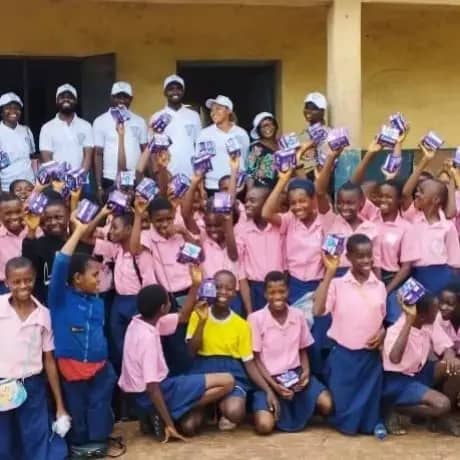
The Pad the Girl Child Project is a flagship intervention of the Ifymotivational Charity Foundation aimed at promoting menstrual hygiene management, reproductive health awareness, and mental wellness among adolescent girls in secondary schools. In 2024, the Foundation successfully implemented the
project at Olokoro Girls’ Secondary School, Olokoro, Umuahia, Abia State, reaching a total of 500 students.
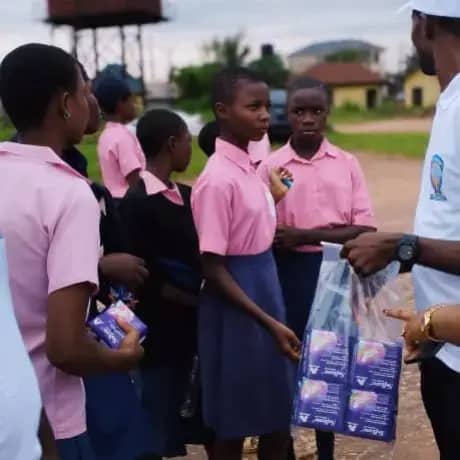
The intervention combined the direct distribution of sanitary pads with structured health education
sessions and a dedicated lecture on suicide prevention and emotional support. The project addressed critical barriers that often force girls to miss school during menstruation, while also creating a safe space for open conversations about mental health — an area that remains under-discussed in many school environments.
Key outcomes included improved knowledge of menstrual hygiene practices, reduced stigma around menstruation, heightened awareness of warning signs of emotional distress and suicidal ideation, and a strengthened sense of care and institutional support among the student body. The Foundation remains open to partnerships and sponsorships to expand this life-changing work to more schools across Abia State and beyond.
Many adolescent girls in Nigeria face significant challenges related to menstrual hygiene management.
The inability to afford sanitary products leads some students to stay at home during their periods, resulting in lost learning days, reduced academic performance, and feelings of shame or isolation. In addition, limited access to accurate reproductive health information perpetuates myths and unhealthy practices.
Beyond physical health, adolescent mental health has become an increasingly urgent concern. Pressures from academic demands, family expectations, peer relationships, and social media contribute to rising levels of anxiety, depression, and, in extreme cases, suicidal thoughts among young people. Schools represent a critical platform for early intervention and support.
The Pad the Girl Child Project was designed to respond to these interconnected needs by combining material support (sanitary pads) with knowledge transfer (health education) and emotional care (suicide prevention and encouragement of support-seeking behaviour).
Primary Objectives
• To distribute sanitary pads to 500 female students of Olokoro Girls’ Secondary School, Olokoro, thereby reducing period-related school absenteeism and promoting dignity.
• To deliver comprehensive health education on menstrual hygiene management, reproductive health,
and personal hygiene practices.
• To conduct a specialised lecture on suicide prevention, recognising early warning signs, and building resilience among adolescent girls.
• To foster a culture of mutual support, encourage help-seeking behaviour, and strengthen the school’s capacity to provide psychosocial care.
Secondary Objectives
• To reduce stigma and myths surrounding menstruation through open, age-appropriate dialogue.
• To create a supportive environment where students feel valued and know that help is available.
• To document lessons learned for scaling the intervention to additional schools.
The project was executed in 2024 at Olokoro Girls’ Secondary School, Olokoro, Umuahia. Implementation followed a structured, participatory approach involving the school leadership, teaching staff, and the Foundation’s programme team.
5.1 Health Education Session
A comprehensive health education session was facilitated for the students. Topics covered included:
• Understanding the menstrual cycle and what is normal versus when to seek medical advice.
• Proper use, changing frequency, and hygienic disposal of sanitary pads.
• Personal hygiene practices before, during, and after menstruation.
• Common menstrual disorders and simple self-care measures.
• Dispelling myths and cultural misconceptions around menstruation.
• The link between good menstrual hygiene and school attendance, confidence, and overall well-being.
The session was interactive, allowing students to ask questions in a safe and non-judgmental atmosphere. Age-appropriate language and visual aids were employed to maximise comprehension and retention.
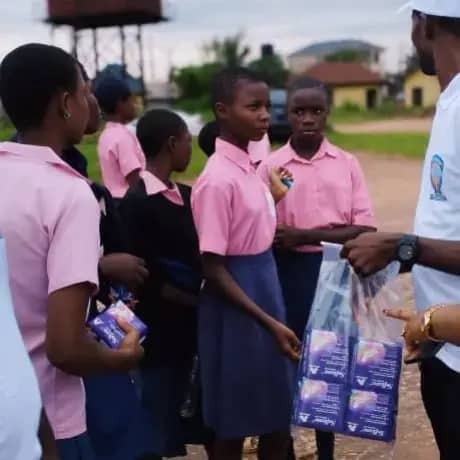
5.2 Sanitary Pads Disbursement Following the educational component, sanitary pads were distributed to all 500 participating students.
Each beneficiary received a sufficient quantity of pads to support her menstrual hygiene needs for a meaningful period. The distribution was conducted in an organised, respectful manner that preserved the dignity of every girl. This direct material support is a cornerstone of the project, addressing the immediate economic barrier that prevents many girls from managing their periods with confidence and
comfort.
5.3 Lecture on Prevention of Suicide
Recognising the growing mental health challenges faced by adolescents, a dedicated lecture on suicide prevention was delivered. The session addressed:
• Understanding emotional distress, depression, and suicidal ideation in clear, accessible language
Recognising warning signs in oneself and in peers (withdrawal, hopelessness, changes in behaviour, talk of self-harm, etc.).
• Practical coping strategies and healthy ways of managing stress, academic pressure, and
interpersonal conflict.
• The critical importance of speaking out and seeking help early — from trusted adults, school
counsellors, parents, or professional services.
• How to support a friend who may be struggling, including listening without judgement and connecting them to help.
• Reinforcing the message that every life has value and that temporary pain does not have to be
permanent.
The lecture was carefully facilitated to be sensitive, hopeful, and empowering rather than alarming.
Students were encouraged to view mental health as an essential part of overall well-being, equal in
importance to physical health.
5.4 Encouragement of Support and Peer Care
Throughout the programme, strong emphasis was placed on building a culture of mutual support.
Students were encouraged to look out for one another, to create circles of trust, and to know that the Foundation and the school stand ready to assist. Messages of affirmation, resilience, and self-worth were woven into every segment of the intervention. The goal was not only to equip individual girls but to strengthen the collective fabric of care within the school community
Strong school partnership — Collaboration with the leadership and staff of Olokoro Girls’ Secondary School ensured smooth logistics, student mobilisation, and a conducive atmosphere for sensitive discussions.
• Holistic design — Integrating pad distribution with health education and mental health content addressed both immediate practical needs and longer-term knowledge and resilience.
• Respectful delivery — All activities were conducted with dignity, age-appropriate messaging, and cultural sensitivity.
• Clear focus on the girl child — The project remained tightly aligned with the Foundation’s mission to uplift and protect adolescent girls.
While the project was successfully delivered, many insights emerged that will strengthen future
editions:
• Sustained impact requires follow-up. One-off distributions are valuable, but periodic replenishment of pads and reinforcement sessions would deepen benefits.
• Mental health content generates high engagement. Students responded positively to the suicide-prevention lecture, indicating a clear need for ongoing psychosocial programming in schools.
• Teacher involvement is critical. Training a core group of teachers as first-line supporters can extend the reach of the messages beyond the day of the intervention.
• Partnership and sponsorship remain essential. Expanding to more schools depends on reliable funding and collaborative relationships with education authorities and corporate partners.
Comments
Be the first to comment on this story.
 2024-2025 leukaemia interventions